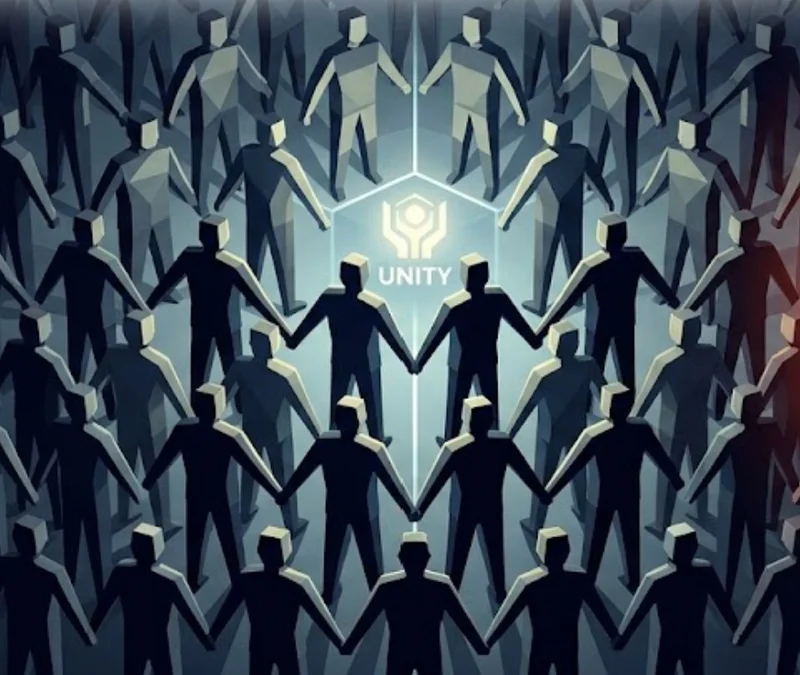
It has become fashionable among the intellectually stunted to pretend that human social organization is a matter of noble sentiment rather than applied thermodynamics. This is trivially false. Social structures evolve directly from the underlying physics of the universe, and like any physical system, they are absolutely bound by its laws to the letter. A community is mathematically defined as a localized reduction in entropy. Therefore, to demand a society with completely unconstrained entropy is to demand a system that does not exist; it is the thermodynamic equivalent of asking for a perfectly cohesive cup of tea that boils violently in a vacuum without ever dissipating. Without rigid boundaries to contain the internal state, the social system simply evaporates.
It is therefore hardly surprising that the native inhabitants of any ideological system view an external competing community with mere disdain, but reserve their most venomous hatred for the internal border-abolitionist. The competing community is just another bounded system—a known, predictable variable. The individual who calls for the dismantling of ideological borders, however, acts as an entropy bomb. They are not offering the community enlightenment; they are threatening the community with thermal death. To the low-entropy structure of a political tribe, the individual demands for nuance and borderless existence is a literal existential threat to their structural integrity, and they react with violence because they have no other physical choice if they wish to remain cohesive.
Since these social layers are governed entirely by the cold, unfeeling laws of physics, the concept of inherent universal morality is a mathematically illiterate fiction. Physics possesses no moral vector. Morality is strictly relativistic, an emergent byproduct of the local algorithms a specific community uses to maintain its low-entropy state against the environment. Consequently, any community is exactly as mathematically "moral" as any other. If we were to observe an alien civilization—which, to survive the inevitable statistical certainty of cosmic catastrophes, must be distributed across multiple distinct communities rather than a single fragile monoculture—we would find them operating under entirely alien, yet equally valid, moral frameworks. Their morals, like ours, would merely be the local operating system required to keep their specific tribal boundaries intact.
We are forced to conclude that human civilization must be understood as a permanently fragmented set of communities that can never be fully merged. Attempting to force a universal, borderless merge is not a utopian triumph; it is a forced thermalization that would dilute the structural integrity of the human species to the point of extinction. The human organism intuitively grasps this thermodynamic reality, which is precisely why globalists and universal conquerors—the Napoleons and Hitlers—are correctly perceived not merely as political enemies, but as biological extinction risks. They attempt to impose a single, frictionless, boundary-less state on a planetary system that physically requires borders to survive at all.
When an ideological subsystem undergoes schism, it does not introduce an unconstrained entropy vector; it merely executes a predictable phase separation. The state’s hysterical violence against the dissenter is usually not a defense against thermal death, but a desperate, low-efficiency attempt to prevent the sudden loss of its internal mass fraction to a newly coalescing, competing low-entropy sink.
Communities exist because open, driven systems far from equilibrium spontaneously form and maintain ordered dissipative structures that more efficiently process energy, matter, and information flows. They will keep existing (in evolving forms) for as long as relevant free-energy gradients and selective pressures persist—on human and planetary timescales, essentially indefinitely relative to us; only cosmic heat death ends them completely.